

Part 1: beachhead, persona, and proof of value
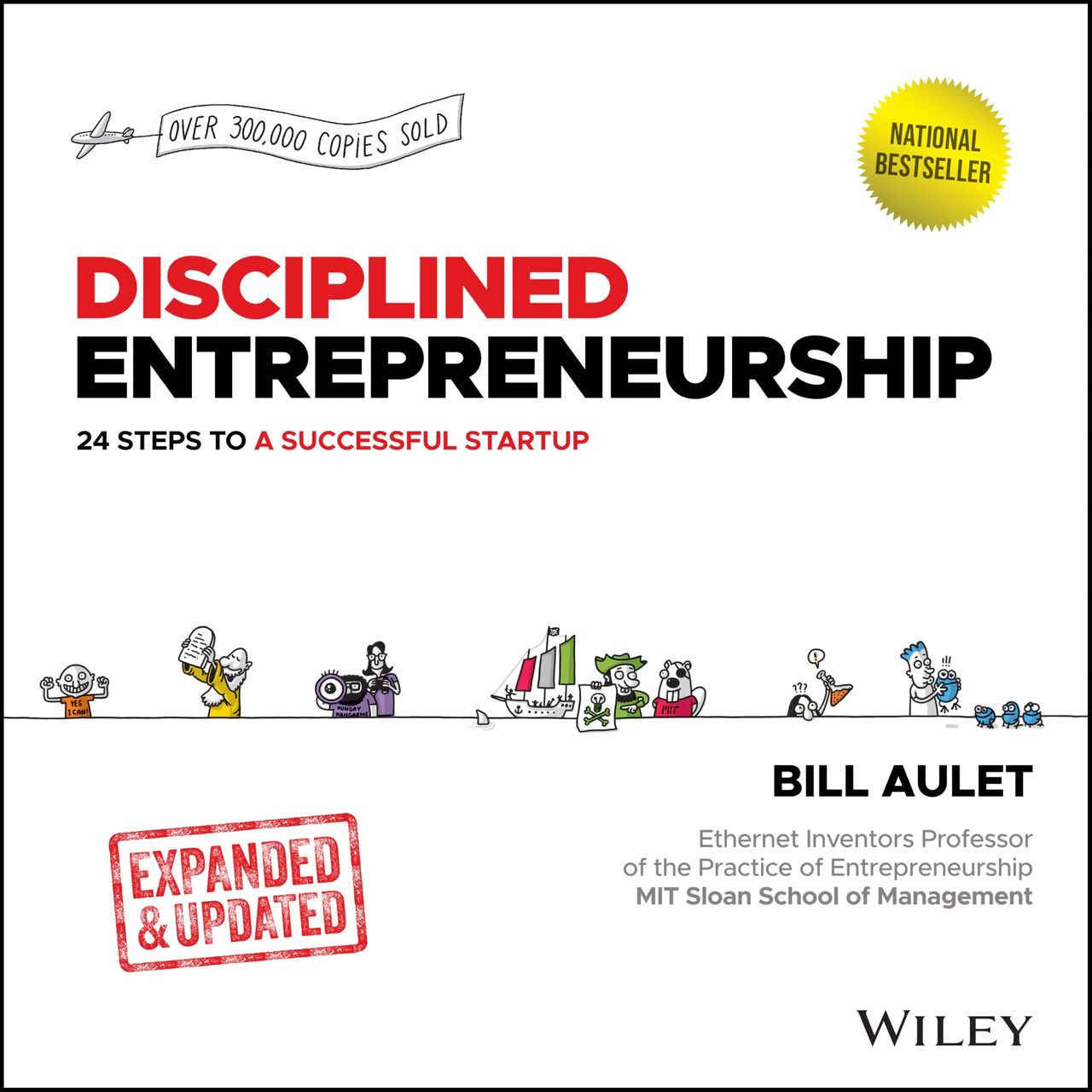
Last week we sat with a clinician-founder who was swamped by options. Five possible settings, three user groups, two pricing models, zero traction. In 45 minutes we walked the first half of Bill Aulet’s Disciplined Entrepreneurship framework. Noise turned into a plan. Confidence returned. That is why we are doing this series. Medtech is complex: safety, evidence, buyers, budgets. Discipline beats enthusiasm. This post covers Phases 1–2, Steps 1–12. Next week we will cover the path to a paying customer, the money, testing, and the move to an MVBP.
TL;DR – 20s read
Mindset is not enough. Method matters.
- Pick one beachhead market and design for one persona and one workflow.
- Put numbers on value in the buyer’s terms: time, cost, outcomes, risk.
- Map who decides and how adoption really happens.
- Your job this week: write up Steps 1–12, then validate with ten real prospects.
The map: where Part 1 fits
Aulet’s 24 steps answer six questions: who is your customer, what you can do for them, how they buy, how you make money, how you build and test, and how you scale. Part 1 focuses on the first two questions: Phases 1–2, Steps 1–12. These get you from a fuzzy idea to a focused target, a clear user, a value story with numbers, and a first cut of how adoption works.
Phase 1: Who is your customer? Steps 1–6
Aim: move from “healthcare” to a single, testable beachhead market you can win.
Step 1: Market segmentation
Start wide, finish narrow. Brainstorm 6–12 segments where your solution could apply. Be concrete: setting, clinician type, patient cohort, and use case. Examples: community wound clinics for diabetic foot checks, acute stroke teams in regional centres, respiratory wards managing COPD exacerbations.
Score each segment quickly on four things: urgency of need, access to users, evidence burden, and word-of-mouth potential. You are looking for a pocket where pain is acute, the community talks to itself, and you can get in the room.
Step 2: Select a beachhead
Pick one market you can win first. Not the biggest. The one with a tight community, a clear buyer, and reachable channels. Write the sentence and stick it on the wall:
“We will start with [user] in [setting] for [use case].”
Examples: “Respiratory nurses in district general hospitals for daily COPD symptom capture.” “MSK physiotherapists in primary care networks for pre-op strengthening programmes.”
Step 3: Build an end-user profile
Design for the person who touches the product daily. Capture environment, constraints, and pinch points. What equipment do they already use. Where do they work. What breaks their day. Observe or interview three to five people in that role. Do not pitch. Watch how the job is actually done.
Output: a paragraph you could read aloud to your team. If your product is used by patients, write a parallel patient profile, but keep one primary end user for design focus.
Step 4: Calculate the TAM for the beachhead
Check the niche can sustain a business. Do a bottom-up calculation:
- Volume: count sites, clinicians, procedures or tests in this beachhead.
- Price: per unit, per use, or per year, based on realistic anchors.
- TAM: volume × price.
Use real proxies where you can: clinics per ICS, procedures per theatre, beds per ward. If the number looks thin, do not pad it. Either adjust price with a value story or pick a better beachhead.
Step 5: Create the beachhead persona
Humanise the target so design and copy stop drifting. Give your persona a name, role, goals, fears, and success measures.
Example: “Amira Khan, band 6 respiratory nurse, district general hospital, manages 24 patients on a 28-bed ward. Success means fewer deteriorations and smoother handovers. Frustrations: duplicate charting, clunky devices, training that does not stick.”
Sanity check: would Amira switch from the status quo? Under what conditions?
Step 6: Map the full life-cycle use case
Trace the journey from first hearing about you to reorder. Include clinical and admin gates.
- Discovery: where Amira hears about you. Conference, peer, vendor, internal email.
- Evaluation: demo, pilot design, clinical criteria.
- Approvals: clinical safety, IG, procurement, finance.
- Set-up: installation, training, documentation.
- Use: daily workflow, consumables, data capture, downtime.
- Support and reorder: service calls, updates, replenishment.
Write it as a story from Amira’s point of view. Add the moments where regulatory or privacy reviews happen so nothing surprises you later. This narrative becomes your adoption plan and your risk list.
Phase 2: What can you do for them? Steps 7–12
Aim: shape a solution that solves the top job and will get adopted by real people.
Step 7: Draft a high-level product spec
Create a one-page mock brochure. Show the outcome and the minimum features required. No engineering deep dive. Tie every feature to the persona’s top two jobs.
Keep options open while you gather reactions. If you cannot explain it on one page, it is not simple enough yet.
Step 8: Quantify the value proposition
Value in their numbers, not yours. Build a before/after table for the persona and the economic buyer.
Example:
- As-is: COPD observations take 14 minutes per patient per day. Missed deteriorations lead to avoidable transfers.
- With us: 8 minutes per patient per day. Earlier flags reduce unplanned escalations.
Turn that into money and outcomes: minutes saved × value per minute, escalations avoided × cost per event, patient impact explained in plain terms. Lead with the metric the buyer cares about most. A ward manager might care about staffing minutes. A finance lead might care about bed days and penalties. Pick two metrics and make them visible.
Step 9: Identify your next ten customers
Move beyond friendly feedback. Build a list of ten prospects in your beachhead and speak with them. Use your spec and value table to structure the conversation. Ask for concrete next steps: a site visit, a pilot, a letter of intent, an introduction to the budget holder.
Look for urgency signals: “When can we try this.” “We have a slot for a trial in November.” “I will introduce you to procurement.” Lukewarm interest is a useful no. It tells you to adjust the spec, the segment, or the value story.
Step 10: Define your core
Write why you still win when others wake up.
Options to consider:
- Protected IP that maps to the benefit.
- Unique data sets or models.
- Workflow integration that others cannot match.
- Channel access or partnerships that change reach.
- Know-how: clinical techniques, manufacturing, service.
One-liner: “We win because only we can [core] that drives [benefit the persona cares about].” If your “core” does not tie to the benefit, keep working.
Step 11: Chart your competitive position
Show, do not tell, why you are the best choice. Pick the two axes your persona cares about most. Plot current options and your offering. If you are not top-right, either sharpen the product to win on those axes or refine the segment so you are solving the right problem for the right people.
Keep a second version for the economic buyer if their priorities differ. You will need both in conversations.
Step 12: Map the decision-making unit (DMU)
In medtech, users rarely buy alone. List real roles and, if possible, names:
- Champion: often your end user or clinical lead.
- Economic buyer: procurement, budget holder, finance lead.
- Influencers and gatekeepers: IT, IG, nursing leadership, pharmacy, therapies, estates.
For each, note success measures and likely objections. This tells you what evidence to gather and what messages to lead with. It also tells you who needs to be in the room and in what order.
Common pitfalls in Steps 1–12, and how to avoid them
Being too broad. “Hospitals” is not a segment.
Mitigation: force a one-line beachhead and commit for 90 days before you revisit.
Overfitting to one clinician’s preference. The loudest voice is not the market.
Mitigation: validate with ten prospects. Look for convergence across sites.
Skipping the numbers on value. Belief is not a business case.
Mitigation: build a simple before/after table with two buyer-relevant metrics.
Ignoring the DMU and approvals. Great demos stall in committees.
Mitigation: map the life-cycle with real names and gates. Ask what evidence each gate needs.
Falling in love with a spec. Nice brochures do not equal demand.
Mitigation: treat the spec as a draft until Steps 8–9 produce urgency signals.
Assuming your network equals the market. Friends say “interesting” and never buy.
Mitigation: include cold outreach in your ten calls. Track hard yeses.
Do this this week: a DIY mini-toolkit
Open a doc and work through these prompts.
Beachhead scorecard
List up to twelve segments. Score 1–5 on: urgency of need, access to users, evidence burden, word-of-mouth strength, pricing power. Pick the top combined score.
Persona paragraph
Name, role, setting, top two jobs to be done, top two constraints, success measures. One paragraph. Read it out loud to test clarity.
Value table
Two-column mini table: “As-is” vs “With us” for time, cost, and one outcome. Add one sentence on risk reduction or safety.
DMU sketch
Champion, economic buyer, three key influencers. For each: what a win looks like to them, what would make them say no, what evidence they need.
Ten-call plan
Who you will call, what you will show, what a strong interest signal looks like. Book five calls today, five tomorrow. End each call by asking for one concrete next step.
Decision rule
Write one line now: “If we do not see two strong interest signals by [date], we will adjust [spec or segment] and repeat.”
What’s next in Part 2
Next week we will cover how customers actually acquire your product, how your business makes money, and how to check the unit economics. We will turn key assumptions into tests, define a Minimum Viable Business Product, show proof that real customers use and pay, and sketch a simple product plan that respects quality and regulation.
Want more like this?
Get the book: Buy Disciplined Entrepreneurship to go deeper into the 24 steps.
Join the list: Subscribe below to get Part 2 and our medtech advice, tools and tips in your inbox.
PS.This article is educational, not legal or clinical advice. Check your local governance and clinical safety duties before acting on any guidance.
P.P.S. we do use affiliate links which means we get a small amount of money if you buy something – this is at no cost to you and we never recommend anything we don’t think is awesome! Thanks for reading!