

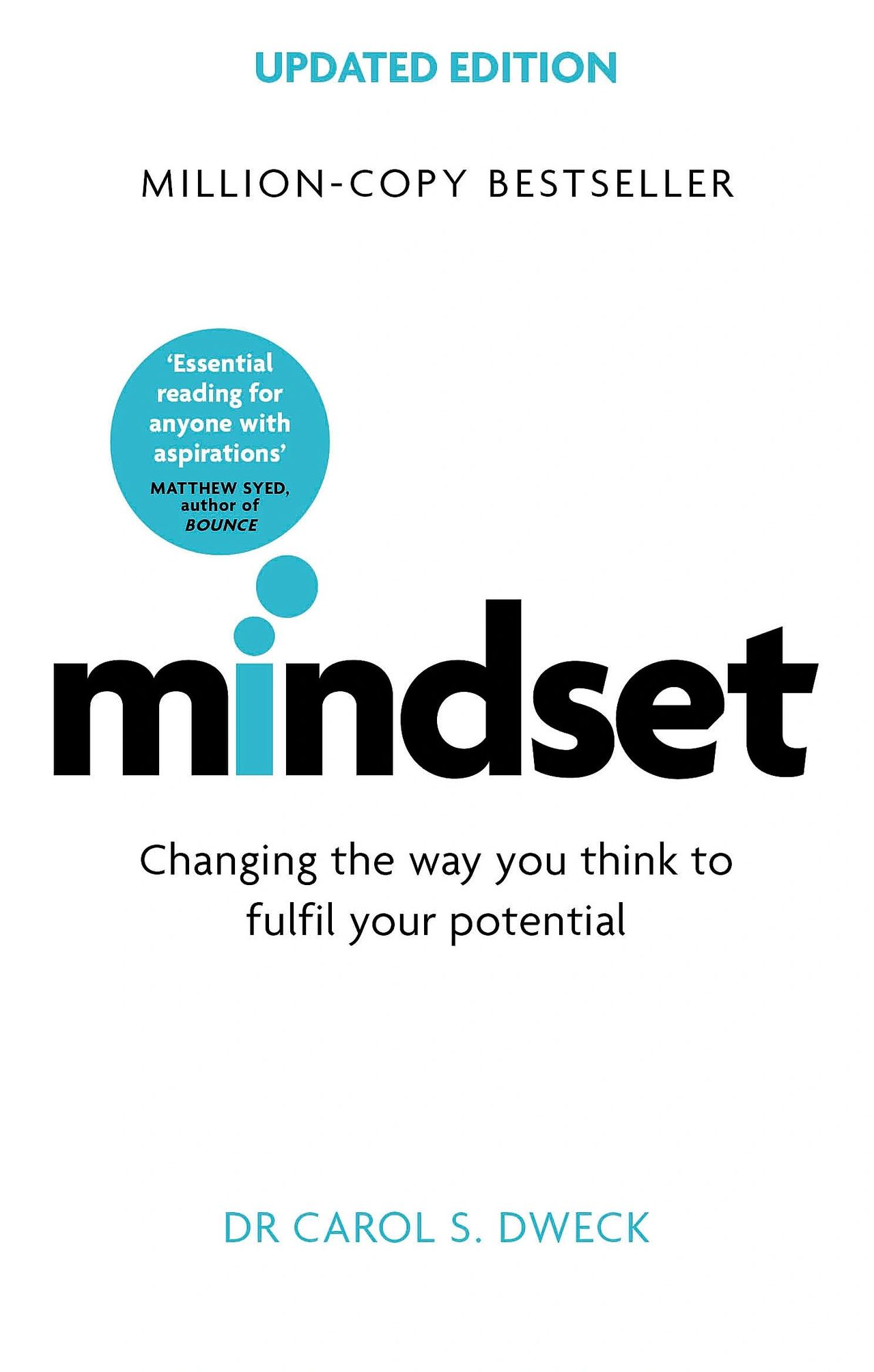
One of the most powerful things we work with the people we mentor on is mindset. Tools and tactics matter, but how you think under pressure, approach challenges and deal with set backs drives your results. This week’s Book Club pick is Carol Dweck’s Mindset: The New Psychology of Success. Our advice below is grounded in her work and in what we see with early-stage teams: resilience, truth-telling, and a bias for learning beat ego every time.
Finding these articles useful? Sign up to our mailing list at the bottom of the page!!
TL;DR
Mindset is not a slogan. It is a way to turn setbacks into growth opportunities and speed up learning in your company.
- Fixed mindset protects ego. Growth mindset protects learning.
- Reframe failure from verdict to data. Learn, adjust, move.
- Tell the truth early. It builds trust and saves runway.
- Reward effort, feedback, and iteration, not heroics.
- Use a weekly loop: name your riskiest assumptions, run small tests, act on evidence.
1) Why mindset matters now
September is when many teams lock in plans for Q4 and the year ahead. It is also when founders are tempted to polish decks and avoid the hardest problems. That is a fixed-mindset move: defend, delay, deny. A growth mindset does the opposite: surface risks, run tests, adapt. The cost of doing nothing is slow learning and wasted runway. Growth-minded leaders choose challenge and treat setbacks as information, which compounds week by week.
- Write down your top three uncertainties / doubts which are your blocking progress.
- Schedule one test for each. Try to do the smallest possible experiment to prove/disprove.
- Share the plan and expected learning with your team and advisers.
Short, sharp tests beat long discussions. Momentum comes from evidence, not opinions.
2) Fixed vs growth in plain English, with a cautionary tale
Here is the simplest distinction. Fixed mindset says ability is set, failure is a verdict, and feedback is a threat. Growth mindset says ability develops with effort and good strategy, failure is information, and feedback is fuel. That shift changes how you react to pressure and criticism.
Dweck’s research includes a striking study. After a tough test, pupils praised for being “smart” were more likely to inflate their scores when telling peers. Almost 40% lied. When performance defines your worth, truth bends to protect ego. Do not import that psychology into your startup.
The industry-scale version of the same trap is Theranos. Promises outpaced evidence, and truth was suppressed. Elizabeth Holmes was sentenced to 135 months in federal prison for defrauding investors. Do not be that founder. Tell the truth, even when it hurts. Progress comes from reality-testing, not image-management.
- Spot your cues: “I am not a business person.” Perfection before user data. Dodging difficult feedback.
- Swap your script: add “yet” to self-talk, ask “what did we learn,” and share one thing you will change next.
Small language shifts make it safer to face reality and move.
3) Four founder traps and simple reframes
Fixed-mindset habits look sensible in the moment, yet they slow you down. Replace them with behaviours that raise your learning rate.
- Ego protection → Truth-first updates. Hiding bad news delays fixes. Share the risk, the evidence, and your next action.
- Fear of failure → Tackle the riskiest thing first. Design one ethical test aimed at disproving your biggest assumption.
- Perfectionism → Pretotypes and rough cuts. Get signal before you invest.
- Sunk cost → Kill or narrow scope fast. Save budget for what works.
If you only change one thing, change the order you tackle work. Hardest first.
4) The Growth Loop: a weekly cadence
Mindset only sticks if it is scheduled. Use this simple weekly loop to turn opinions into evidence and keep improving.
- Assumptions: At the start of the week write down your three most limiting beliefs about your business or your capability, think about desirability, feasibility, and viability (more about this in our Monday Masterclass article here). Example: you are terrified of pitching because you fear criticism and people mocking your idea.
- Test: design a simple experiment that will allow you to explore this belief and whether it is valid. Get out of your comfort zone, this is where learning happens. Example: Seek out an opportunity to pitch to a large group.
- Evidence: run it, capture what happens and any surprises. Example: What feedback did you get? What resonated with your audience? What didn’t?
- Decision: keep, change, or kill. How will you respond to your learning?
- Next move + culture: At the end of the week review what you have learnt, a repeat the cycle. Your focus should be on learning, embedding what you have learnt and getting 1% better everyday.
5) Applying growth mindset to medtech work
A growth mindset helps you move faster while staying safe and credible. Here is what that looks like in common medtech patterns.
- Regulation and safety. Treat regulatory and clinical-safety work as learnable skills. Book a weekly hour to upskill and ask naive questions.
- Evidence and evaluation. Aim for decision-grade evidence for the next buyer decision, not perfection on day one.
- Customers vs users. Move from “users like it” to “buyers will pay for it.” Learn their success measures and constraints.
- Entrepreneurial Skills. Get rid of the belief that entrepreneurs are born. The skills you need need can be learnt and applied with practice, repetition, and bravery. Hate public speaking? Sign up for pitch competitions. Terrible with numbers? Take an online accountancy 101 course. You can do anything you put your mind to.
Curiosity, humility, and iteration are not soft skills. They are how you cross the gap from idea to adoption.
6) Honesty as an operating system
Fixed-mindset cultures slide into distortion. Dweck’s study showed how quickly that can happen when image matters more than improvement. The Theranos story shows the catastrophic end point when truth is optional. In a growth culture, honesty is the default, because learning depends on it. Here’s some techniques you can adopt:
- Truth-first update. “Here is the risk. Here is the evidence. Here is what we are changing.”
- Monthly red team. Invite two outsiders to critique your plan. Record the changes you make.
- Post-mortems. After each key test: what surprised us, and what we will do differently next time.
Make truth routine, not heroic.
7) Team culture: what to reward, and what to stop
Culture moves on the things you praise and the things you ignore. Choose signals that create learning:
- Reward: effort, smart testing, raising bad news early, and helpful peer feedback.
- Stop: heroic late nights, sandbagged updates, and perfect decks without user or clinical signal.
- Meeting hygiene: add one “learning” slide to every review.
- Hiring: pick coachability and curiosity over pedigree. Find people with a growth mindset and bet on them. They’ll pay you back in spades.
This is not fluff. It is how you create a team that gets better every week.
8) Critiques and limits: use with care
Be evidence-led about mindset itself. Large studies show growth-mindset teaching can help, often most for lower achievers, and not in every context. Meta-analyses also find small average effects on grades. Take the core idea, then make it practical with real tests and real metrics. Mindset is necessary, not sufficient. Skills, evidence, capital, and luck still matter.
A healthy balance is belief plus measurement. Optimism that you can improve, paired with clear dashboards for whether you are.
9) Mini-case: a simple before and after
Story beats statistics in busy weeks, so here is a short before and after from a common scenario.
- Before. A clinician-founder avoids buyer calls, polishes the deck, and stalls on information governance.
- Intervention. One Growth Loop per week. First calls with a budget holder. Scoped privacy and safety tasks with named owners. Micro-pilot to answer one question with a pre-agreed paid next step.
- After 6 weeks. Clearer buyer, trimmed feature set, defined evidence ask, and a sharper conversion rate on first meetings.
Nothing fancy. Just truth-first habits and steady tests.
10) Toolkit you can use this week
Mindset only helps if it changes your calendar. Use these quick prompts and templates to get moving.
Checklist: flip fixed to growth
- Where am I defending rather than learning?
- What result hurt my ego this week, and what will I test next because of it?
- What truth am I tempted to hide, and who needs to hear it?
Scripts
- Truth-first update. “One thing I got wrong, the evidence that changed my mind, and what I am doing next.”
- Red-team invite. “Please try to break this plan. What are we missing?”
- Not yet. “We have not achieved X yet. Here is what we are testing to get there.”
Metrics to track
- Learning velocity, measured as tests per week.
- Percentage of riskiest assumptions tested in the last 30 days.
- Percentage of updates that include a change based on evidence.
Want more like this?
Grab your copy of Mindset here
Join the Medtech Mentor mailing list to get Book Club and Masterclass reviews every week. You’ll also get our highly rated Founder’s starter pack which has been getting great feedback from our community – check it out!
Hope you found this useful!
The Medtech mentor team
PS. This article is educational, not legal or clinical advice. Check your local regulatory and clinical-safety duties.
P.P.S. we do use affiliate links which means we get a small amount of money if you buy something – this is at no cost to you and we never recommend anything we don’t think is awesome! Thanks for reading!
References
- Carol S. Dweck, “What Having a Growth Mindset Actually Means,” Harvard Business Review, 13 Jan 2016. Harvard Business Review
- Stanford Graduate School of Education, “Praising intelligence costs children’s self-esteem and motivation,” 1 Nov 2007. bingschool.stanford.edu
- United States Department of Justice, “Elizabeth Holmes sentenced to 135 months,” 18 Nov 2022. Department of Justice
- David S. Yeager et al., “A national experiment reveals where a growth mindset improves achievement,” Nature, 2019. Nature+1
- Victoria F. Sisk et al., “To What Extent and Under Which Circumstances Are Growth Mind-Sets Important to Academic Achievement? Two Meta-Analyses,” Psychological Science, 2018.