

Welcome to our Medtech Mentor Bookclub. We’re starting with a classic – the Lean Startup – enjoy!!
You’ve got a game-changing idea. Maybe it started with a patient story, a clinical frustration, or a breakthrough during a late-night brainstorm. But now what?
The temptation is strong to dive into building: wireframes, branding, a prototype. But what if you’re solving the wrong problem? What if, after all that effort, you discover that no one wants what you’re making?
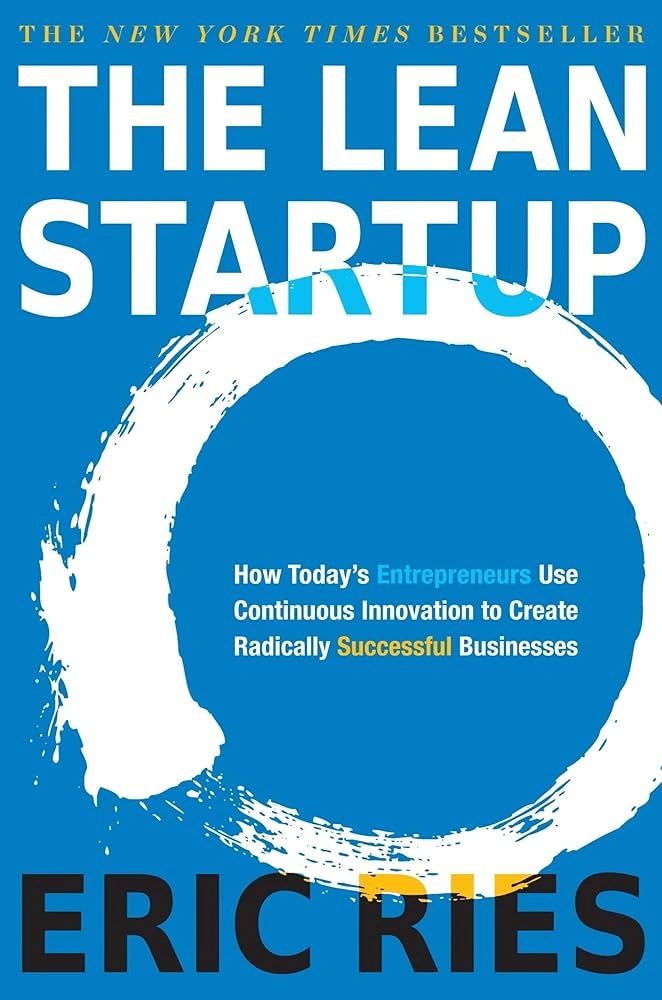
This is the painful trap *The Lean Startup* by Eric Ries helps founders avoid. It’s not about moving slowly — it’s about **learning quickly**. Ries invites us to stop thinking like builders and start thinking like scientists. Hypotheses. Experiments. Data. Insight.
It’s not glamorous. But it’s how the best startups avoid building expensive failures — and end up building something people will actually pay for.
If you’re a medtech founder navigating clinical complexity, long development cycles, or regulatory hurdles, The Lean Startup could save you months of wasted effort. And help you build something that actually changes lives.
💡 Why This Book Matters for Medtech Founders
Health innovation is full of risk. Clinical, technical, financial — and let’s not forget regulatory. That’s why The Lean Startup is so powerful. It gives early-stage founders a practical, step-by-step approach to testing assumptions and reducing waste.
Here’s why it matters:
- You’ll learn how to validate your idea early — before investing heavily in development.
- It teaches a framework to iterate rapidly, even in highly regulated environments.
- It reframes failure — not as loss, but as data that moves you forward.
Medtech founders often face high stakes, long timelines, and tight budgets. This book helps you stay agile in a world that rewards learning, not perfection.
📘 Top 5 Takeaways & Insights
1. Build-Measure-Learn: The Heartbeat of a Startup
Ries’ signature framework encourages founders to generate hypotheses, build a minimum viable product (MVP) quickly to test them, measure how real users interact with it, and learn whether your assumptions / hypotheses are valid. The faster you repeat this loop, the smarter your startup becomes.
💡 For a medtech founder: An MVP might be a clickable prototype, a pilot study, or even a service simulation — not necessarily an app or bit of tech.
2. Validated Learning Is Your Metric of Progress
Early in your journey, revenue and user growth aren’t the only signs of progress. What matters more is learning what customers actually need, backed by real-world data. That’s validated learning.
Ask: Have I tested the riskiest assumption in my business model — or am I just building in a vacuum?
3. Innovation Accounting: Don’t Be Fooled by Vanity Metrics
Ries warns against tracking meaningless numbers like website hits or app downloads. Instead, track what actually matters — retention rates, activation milestones, conversion steps — metrics that show if your product is working.
Tip: Define one metric that matters for your next experiment — and hold yourself to it.
4. Pivot or Persevere?
At each learning checkpoint, ask: Is this idea working? If not, it’s time to pivot — change direction without starting from scratch. Ries outlines types of pivots (e.g. customer segment, value proposition, zoom-in).
Remember: Pivoting isn’t failure. It’s strategic evolution.
5. Choose Your Engine of Growth
The Lean Startup identifies three scalable growth models:
– Sticky: Retention is king.
– Viral: Users bring other users.
– Paid: Growth through marketing.
For medtech? You might aim for sticky growth within a specific health system, then expand via viral adoption among clinicians or patients.
🧠 How to Apply this as a Medtech Founder
Start by mapping your assumptions. Ask yourself:
– What do I believe about the problem, the customer, and the solution?
– Which of these assumptions, if wrong, would kill the business? (this is known as your ‘leap of faith’ assumption)
Then run your first experiment:
– Define your riskiest assumption
– Design a lightweight MVP to test it (a landing page, a pilot, a mock consult, an interview script)
– Track behaviour, not opinions
– Use what you learn to decide: pivot or persevere?
💬 Consider this your mantra:
“I am not building a product. I’m running a series of experiments to discover what people truly need.”
✅ Who This Book Is (and Isn’t) For
Great if you…
– Are building a digital health or medtech solution under uncertainty
– Need to convince investors or co-founders that your approach is grounded in data
– Want a clear framework for product discovery and early growth
Less useful if you…
– Are scaling a mature business with well-defined demand
– Want technical detail on implementation or regulation
– Dislike iterative development or ambiguity
🔗 Further Reading & Resources
– 🔗 Click Here to purchase a copy of The Lean Start Up
– 📘 Coming soon: Our ‘books every medtech founder should read’ continues with reviews of Running Lean, The Mom Test, and Hooked
– 👉 Follow us on LinkedIn or sign up below to join our mailing list to get these blog posts, insights and expert tips straight to your inbox/
– 🧰 Free Resource: if you sign up below get access to our awesome Medtech Founder’s Starter Pack – filled with tools, advice and useful stuff!!
P.S. we do use affiliate links which means we get a small amount of money if you buy something – this is at no cost to you and we never recommend anything we don’t think is awesome! Thanks for reading!