

Last month a clinician-founder sat down with us after winning their first grant. They were building a digital therapeutic to help patients change their behaviour. Exciting problem, early funding, keen team. Their blocker was engagement. They were not sure which design techniques would help patients actually use the app and stick with it. We walked them through Nir Eyal’s Hook Model from his book ‘Hooked’. It gave them a simple way to think about triggers, actions, rewards, and “investment” in the product.
This post shares that approach so you can use it too. Big tech and gambling firms use habit design to capture attention. Our job in medtech is different. We are here to help people build healthier habits, reduce risk, and stick with treatment plans. The same mechanics can serve that mission when used with care.
If you missed our last playbooks, see our review of Disciplined Entrepreneurship, and our MVP testing guide.
TL;DR
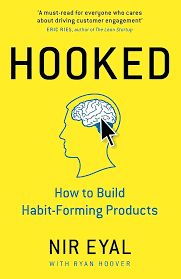
Habit-forming design is not just for social media. Used ethically, the Hook Model can help patients change their behaviour, stick with healthy habits and help teams learn faster.
- Four stages matter: Trigger, Action, Variable Reward, Investment.
- Start with one high-value habit, remove friction so it is easy to do.
- Rewards should support health goals, not bait attention.
- Ask for “investment” that improves the next session, for example a symptom log that unlocks better insight.
- Keep consent, controls, and dignity front and centre.
Why medtech needs habit-forming design
Digital therapeutics, remote monitoring, and self-management tools only work if people use them. That means forming and keeping small habits: open the app, complete a two-minute check-in, do a five-minute exercise, review a personal trend. If you design these flows well, patients are more likely to engage long term, change their behaviour and get value, clinicians will see better data, and your impact / evidence will improve. If you design them poorly, you will see classic drop-off curves and a pile of unused features.
The uncomfortable truth is that big tech and online gambling already exploit these mechanics. Social media feeds and slot machines share a pattern: a cue, a simple action, an unpredictable reward, and a reason to return. We want ethically motivated founders to use the same science in the open, with consent, to promote health and positive behavioural change, not addiction.
A real case: from early funding to a workable plan
Our mentee had just won a small grant. They wanted to spend it on new features. Engagement was low and they were unsure what to build. We went through the Hook Model with them in depth. Understanding the four key phases and the overall cycle gave them clarity over what to build.
- Trigger: What reliable cue would bring patients back? We found time-based reminders aligned to existing routines, plus optional “context” prompts the patient could set.
- Action: What is the smallest step worth doing daily? We cut the daily flow to a single thumb tap and a two-question check-in.
- Variable reward: What feedback would feel meaningful? We swapped badges for social reinforcement / community support, plus the option to share wins with a partner or clinician.
- Investment: What make the patient feel more invested in the app and their health journey? We added a ‘streak’, a one-line note field, a saveable plan, and an opt-in for tailored tips.
None of this was expensive. It was a shift from “more features” to “fewer, stickier behaviours.” The team built are now building a new onboarding flow and a one-week experiment plan before touching anything else.
The Hook Model in plain English
The Hook is a four stage repeating cycle. Each stage has simple rules and common traps. Let’s look at each one:
1) Trigger: what starts the behaviour
Triggers prompt the user to act. There are two kinds.
- External triggers: things you send or place in the user’s world. Examples include a push notification, a calendar event, a banner, a QR code in a clinic.
- Internal triggers: feelings, routines, or contexts that push the user to act without a prompt. Think about the urges you get to pick up your phone and check your email / socials / favourite websites. These are internal triggers.
Initially you are likely to need external triggers (like a push notification for example), however if you can cycle people quickly through the 4 stages of the model then you’ll find that these become redundant and the user is likely to develop internal triggers, this is a good marker of a new habit being formed.
For health apps, start with one respectful external trigger and the internal moment that pairs with it. For example: a 7pm nudge to log asthma symptoms, anchored to the patient’s usual evening routine. Keep prompts optional, predictable, and easy to adjust. Patients should control frequency and type.
Avoid: noisy notifications that interrupt work or sleep, fear-based prompts, or tricks that hide the choice to opt out. These erode trust and will be blocked.
2) Action: the simplest behaviour in anticipation of a reward
People act when three things come together: a trigger, motivation, and ability. Motivation is hard to control. Ability is where your design choices come in. Your job is to make the target action tiny and easy to complete (remove friction).
- Reduce steps: one tap to open the check-in, one tap to submit.
- Remove confusion: plain words, large targets, no dead ends.
- Design for context: thumb-only, one-handed, readable in poor light.
A practical rule: if the action takes more than 10 seconds on a bus with one hand, it is too hard. If it requires a password every time, you will lose people. Use device biometrics or NHS Login where appropriate, and cache sensibly within policy.
Avoid: long forms, hidden fields, surprise permissions, or forced flows that treat every user the same.
3) Variable reward: feedback that matters, with a touch of unpredictability
Rewards close the loop. A fixed reward teaches nothing new. A variable reward adds a little curiosity and keeps attention. Nir Eyal gives the example of rats in a lab pressing a lever to get a reward, if they get the same reward every time they get bored and stop. If its a variable then they will keep on pressing it.
Useful types of reward:
- Self: a visible step towards a personal goal. Examples include streaks, progress rings, or a small improvement on a chart.
- Social: recognition from a clinician or trusted peer. Examples include a short “nice work” message when a patient hits a plan, or a supportive nudge in a group they chose.
- Discovery: a tip or insight that feels new and relevant. Examples include, “On days you walk before 11am, your symptoms are milder.”
- Gamification: Winning ‘currency’, points, badges, things your avatar can wear etc etc.
Think about what fits best in the context of your solution. Note you might want to use a combination of the above.
Avoid: endless streak pressure, casino-style animations, or content that pushes doomscrolling. These may create clicks, not health.
4) Investment: a small effort now that it more likely that they’ll come back
People return when they have put something of themselves into the product. That can be data, custom settings, or social ties. Investment increases the chance of another visit and improves the next experience.
Good investments in medtech:
- Data: a quick symptom note that enriches a trend.
- Personalisation: saving preferred times, goals, or exercise types.
- Connections: inviting a carer or clinician to view progress.
- Setup: pairing a sensor so the next session starts faster.
- Gamification: think about customising an avatar, designing your dream home, seeing a streak and so on.
Ask for small, clear investments. Show how each one improves the next session. Keep data control visible. People should feel ownership, not extraction.
Avoid: hoarding data without clear benefit, pre-ticked sharing, or gating care behind long setup tasks.
Applying the Hook to your digital therapeutic: a simple runbook
You do not need a 20-page spec. Open a doc, write answers to these prompts, and build only what you will test in the next two weeks.
- Define one habit. What single behaviour, done daily or weekly, will mean your solution has big impact?
- Pick one trigger pair. Choose an external prompt and the internal moment that fits it. Make both optional and adjustable.
- Shrink the action. Remove friction. Cut steps to the bone. Remove passwords and pop-ups. Test one-hand use on a bus.
- Choose a meaningful reward. Start with a self reward that reflects the patient’s own progress, then add social or discovery where helpful.
- Ask for a small investment. One field, one preference, one connection that makes tomorrow better. Show the benefit.
- Run a one-week test. Roll out to a small cohort. Measure opens, actions completed, 7-day return, and a simple self-report on value.
- Close the loop. Share results with your patient advisors and clinicians. Keep what worked. Drop what did not. Repeat.
If you are new to test design, pair this with our MVP testing guide.
Ethics first: how to build habits without harm
Habit design is powerful. Use it with consent, dignity, and restraint.
- Consent and control: give clear controls for notifications, data sharing, and streaks. Defaults should be humane.
- Proportionality: match prompts and rewards to clinical value. The higher the risk, the tighter the review.
- Transparency: tell users why you are prompting, what happens with their data, and how to pause or leave.
- Co-design: involve patient advisors early. If a mechanic feels icky in testing, it is probably wrong.
- Fairness: test across age, language, and ability. Accessible design is not optional.
- Governance: keep a short log of your choice points. What did you try, what did you remove, why. This builds trust with partners and reviewers.
Common mistakes we see, and what to do instead
Founders fall into similar traps. Here is how to avoid them.
- Too many habits at once. One daily action beats five occasional ones. Start small, then layer.
- Notification spam. More pings do not fix a weak action. Improve ability first.
- Shiny badges. Cosmetic rewards wear out. Tie rewards to meaningful progress.
- Heavy setup. Asking for lots of data up front kills momentum. Ask for small investments after value is felt.
- Copying social apps. Health is not a feed. Use variability to surface insight, not endless content.
- Skipping patient voice. Design with, not for. Ten short interviews will save months of build.
When the Hook is not the right tool
Not every product needs to be habitual. Some devices are used rarely. Some workflows must avoid prompts. A good rule: only design for habit when repeated action clearly improves outcomes or safety. For everything else, design for clarity and trust, not repetition.
Conclusion
Habit-forming design can feel like a dirty word in healthcare. Used badly, it is. Used well, it is the difference between a download and a daily routine that supports real outcomes. The Hook Model gives you a clean way to think about cues, actions, rewards, and patient investment. Start small, design with people, be open about what you are doing and why. If you do that, you will help more patients and build a stronger case for your product.
Want more like this
Join the list: Subscribe below to get Medtech Mentor Book Club articles, masterclasses and practical playbooks in your inbox.
Book link: Buy Hooked: How to Build Habit-Forming Products here .
PS We use affiliate links and may receive a small commission at no cost to you. We only recommend resources we find useful.
PPS This article is educational, not medical or legal advice. Check local governance and clinical safety duties before acting.